⚡ Quick Summary (TL;DR)
Sodium benzoate (E211) is one of the most widely used food preservatives. This article reviews the latest regulatory assessments, potential formation of benzene in beverages, possible behavioral effects in children, and safe daily intake levels.
What Is Sodium Benzoate (E211)?
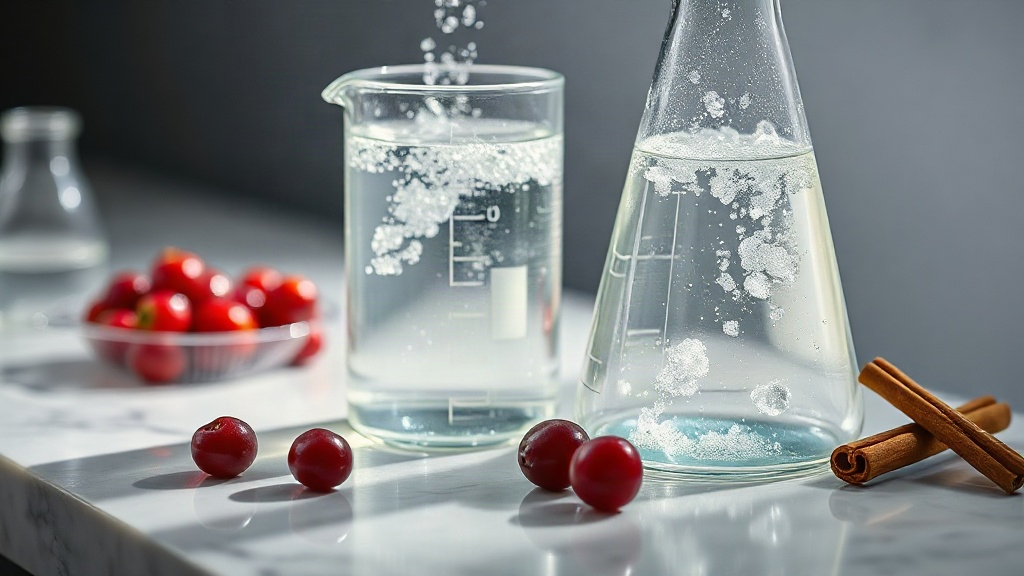
Sodium benzoate is the sodium salt of benzoic acid, naturally occurring in cranberries, prunes, and cinnamon. Commercially it is produced by reacting sodium hydroxide with benzoic acid. It functions primarily as an antimicrobial preservative, inhibiting the growth of bacteria, yeast, and molds, especially in acidic environments (pH below 4.5). It is commonly found in carbonated beverages, fruit juices, pickles, sauces, and salad dressings.
Regulatory Safety Assessments
Both the FDA and EFSA consider sodium benzoate safe when used within established limits. The acceptable daily intake (ADI) set by the Joint FAO/WHO Expert Committee on Food Additives (JECFA) and adopted by EFSA is 0–5 mg/kg body weight per day. In the United States, it is Generally Recognized as Safe (GRAS) up to 0.1% concentration in food. Recent EFSA re-evaluations (2016–2023) confirmed no genotoxic or carcinogenic potential at approved usage levels.
Benzene Formation Concern in Beverages
When sodium benzoate is combined with ascorbic acid (vitamin C) in soft drinks and exposed to heat or light, trace amounts of benzene can form through decarboxylation. The FDA has monitored this since 2005 and set a maximum contaminant level of 5 ppb for benzene in beverages. Most modern formulations have been reformulated to minimize this reaction, with current market testing showing levels well below regulatory thresholds according to FDA surveys (2020–2022).
Potential Behavioral Effects and ADHD
Some studies, including the Southampton study (2007) published in The Lancet, suggested that mixtures of sodium benzoate with certain artificial colors may increase hyperactivity in children. However, subsequent EFSA and FDA reviews concluded that sodium benzoate alone does not produce adverse behavioral effects at permitted levels. The observed effects were attributed primarily to the color additives rather than the preservative itself.
Practical Recommendations
For the general population, sodium benzoate consumption from approved food uses remains well below the ADI. Consumers concerned about preservatives can choose products labeled “no artificial preservatives” or opt for naturally preserved alternatives using cultured dextrose, vinegar, or high-pressure processing. Those with asthma or urticaria should note that, in rare cases, benzoates may trigger sensitivity reactions, though prevalence is low (less than 1% of the population).
"Reading ingredient labels before checkout is the single most effective habit for reducing unnecessary additives in your daily routine."— Dr. Elena Rostova, PhD in Food Biochemistry
Frequently Asked Questions
Is sodium benzoate the same as benzene?
No. Sodium benzoate is a salt used as a preservative. Benzene is a different chemical that can form in trace amounts under specific conditions when sodium benzoate and ascorbic acid are present together. Regulatory agencies strictly limit benzene levels in beverages.
Does sodium benzoate cause cancer?
No credible evidence from EFSA, FDA or IARC links sodium benzoate itself to cancer at food-use concentrations. The ADI provides a substantial safety margin.
Which foods commonly contain E211?
Sodium benzoate is frequently used in carbonated soft drinks, fruit juices, jams, condiments, pickled vegetables, and some cosmetics and pharmaceuticals.
Can I avoid sodium benzoate completely?
Yes, by choosing fresh foods, reading labels carefully, or selecting products preserved with natural alternatives such as potassium sorbate (where not previously covered), vinegar, or fermentation.
What is the safe daily limit for sodium benzoate?
The internationally accepted ADI is 0–5 mg per kg of body weight. For a 70 kg adult this equals 350 mg per day, a level rarely approached through normal dietary exposure.
Scientific & Regulatory Sources Cited
- EFSA Panel on Food Additives and Nutrient Sources added to Food (ANS). Re-evaluation of benzoic acid, sodium benzoate and related compounds (EFSA Journal, 2016).
- U.S. Food and Drug Administration. Survey Data on Benzene in Soft Drinks and Other Beverages (FDA, 2007–2022 updates).
- McCann D, et al. Food additives and hyperactive behaviour in 3-year-old and 8/9-year-old children in the community: a randomised, double-blinded, placebo-controlled trial (The Lancet, 2007).
Check Ingredients Before You Buy
The Bottom Line: Informed shopping decisions start with clear ingredient data. Use ItSafe to scan and understand what is inside your food and cosmetics before you checkout.